Department of Hematology,
University of tsukuba
Department of Hematology
Prof. SAKATA-YANAGIMOTO Mamiko, MD, PhD
https://www.md.tsukuba.ac.jp/tmrc/en/research_lab/advanced_hematooncology/
(linking to Division of Hemato-Oncology, Transborder Medical Research Center)
Molecular and cellular biology of hematologic malignancies;
Invitation to the fantastic scietific world leaded by SAKATA-YANAGIMOTO Mamiko
Contact: sakatama@md.tsukuba.ac.jp
Other Faculty Members
Assistant Professor Naoki Kurita: Hematopoietic stem cell transplantation, Clinical studies on HSCT & blood diseases
Assistant Professor Takayasu Kato: Molecular mechanisms of acute myeloid leukemia
Assistant Professor Tatushiro Sakamoto: Molecular and cellular research in acute myeloid leukemia
Assistant Professor Keiichiro Hattori: Molecular and clinical research in malignant lymphoma
Assistant Professor Yasuhito Suehara: Molecular and clinical research in malignant lymphoma
Assisant Professor Manabu Fujisawa: Molecular and cellular research in malignant lymphoma and clonal hematopoiesis
Assistant Professor Nguyen Thi Minh Yen: Molecular and cellular research in malignant lymphoma and clonal hematopoiesis
Assistant Professor Sakurako Suma: Molecular and cellular research in malignant lymphoma
Assistant Professor Kennichi Makishima: Molecular and cellular research in malignant lymphoma
Major Clinical Activities
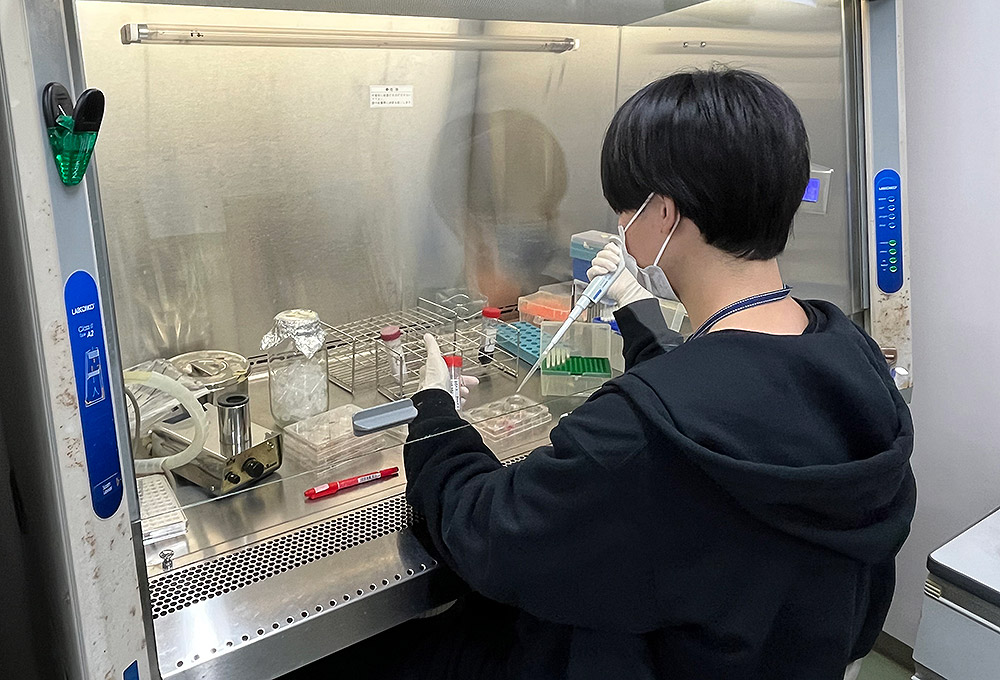 Our department provides comprehensive diagnosis and treatment for a wide range of hematologic diseases, including acute leukemia, myelodysplastic syndromes, myeloproliferative neoplasms, malignant lymphoma, multiple myeloma, aplastic anemia, paroxysmal nocturnal hemoglobinuria, immune thrombocytopenia, and other non-malignant hematologic disorders.
We provide evidence-based standard therapies as well as advanced treatment options, including molecularly targeted agents, antibody-based therapies, bispecific antibodies, autologous and allogeneic hematopoietic stem cell transplantation, and CAR T-cell therapy. Treatment strategies are discussed by multidisciplinary teams and individualized according to disease characteristics, patient age, comorbidities, and treatment goals.
We also use comprehensive gene panel testing for hematologic malignancies, including HemeSight®, to support precise diagnosis, prognostic assessment, and treatment selection. Morphologic, immunophenotypic, cytogenetic, and genomic findings are integrated, particularly in patients with diagnostically challenging or relapsed and refractory disease.
Our hospital provides CAR T-cell therapy for eligible patients with relapsed or refractory B-cell malignancies and multiple myeloma. We work closely with regional medical institutions and participate actively in multicenter clinical studies and clinical trials.
Major Scientific Interests
Our research is driven by questions arising from clinical practice. By integrating patient-derived samples, experimental models, and multi-omics technologies, we seek to understand the biology of hematologic malignancies and translate our findings into improved diagnosis and treatment.
❶ Malignant lymphoma and the tumor microenvironment
We study malignant lymphoma as a complex ecosystem in which tumor cells interact with immune cells, stromal cells, and vascular cells. By integrating genomic analysis, single-cell analysis, spatial transcriptomics, and multiplex tissue imaging, we aim to understand how these cellular networks influence lymphoma development, treatment response, and clinical outcomes.
❷ Clonal hematopoiesis, cancer, and age-related diseases
Clonal hematopoiesis is the age-related expansion of hematopoietic clones carrying somatic mutations. We combine large-scale cohort studies with preclinical models to investigate how clonal hematopoiesis alters immune and inflammatory environments and contributes to cancer development, tumor progression, and other age-related diseases.
❸ Spatial omics and single-cell analysis
We use single-cell transcriptomics, spatial transcriptomics, and highly multiplexed tissue imaging to characterize the cellular composition and spatial organization of diseased tissues. Our goal is to identify cellular interaction networks and microenvironmental niches that support or suppress tumor growth and to develop new diagnostic and therapeutic strategies targeting these niches.
❹ Lipid metabolism in hematologic malignancies
We investigate how altered lipid metabolism contributes to the development, survival, and drug sensitivity of hematologic malignancies, particularly acute myeloid leukemia. Using patient samples, leukemia cell lines, mouse models, lipidomics, RNA sequencing, flow cytometry, and molecular biological approaches, we study fatty-acid elongation and sphingolipid pathways as potential therapeutic vulnerabilities.
Our ultimate goal is to establish a continuous cycle of translational research: bringing discoveries from the laboratory to clinical practice and returning unanswered clinical questions to the laboratory.